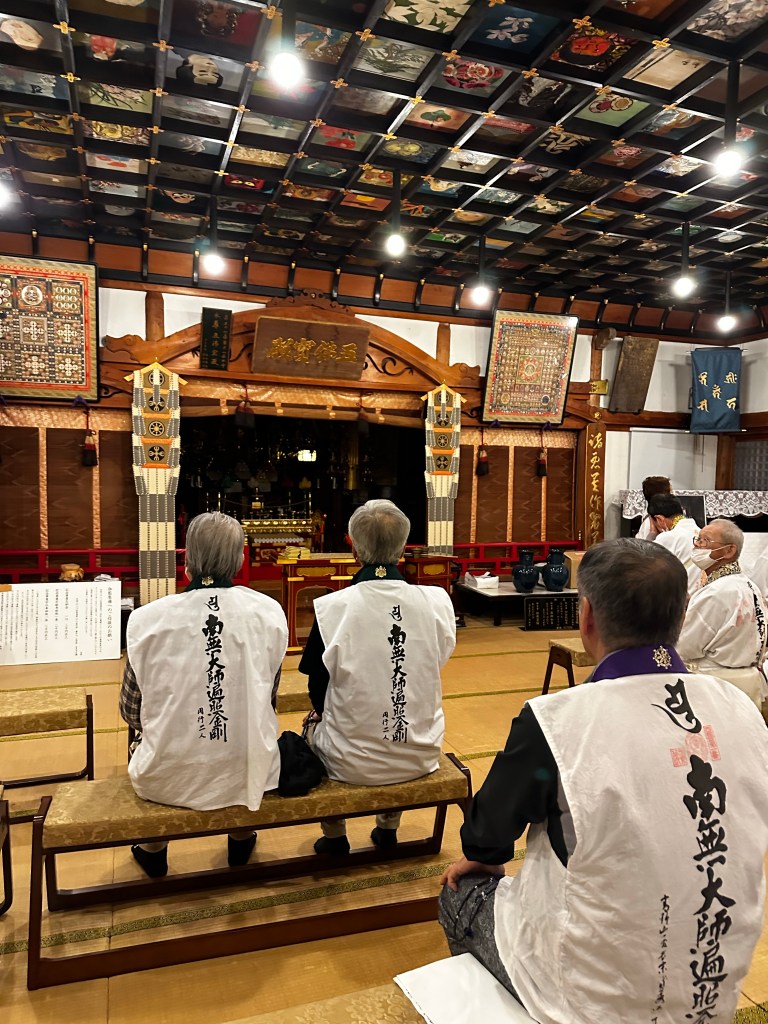
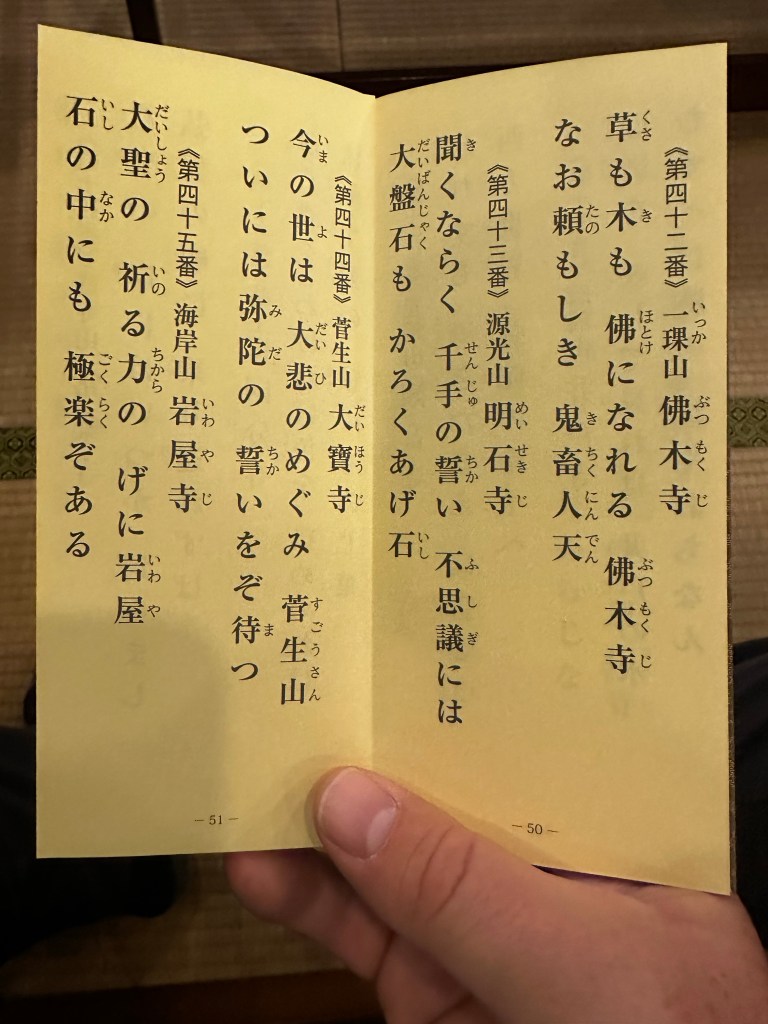
As we were pilgrim guests in the temple, we were invited to attend the morning service. My nephew and I were the only Westerners among the congregation of over a dozen. The rest were Japanese. As we were unlikely to understand even a little of the service, we sat in the back of observe and passively participate. A man, whom I would call the service facilitator, passed around books containing sutras to each member of the congregation. I can phonetically read hiragana and katakana, and I’m familiar with over 400 kanji, so I could at least sound out the sutras even if I didn’t understand them.
The service began with the monk entering greeting everyone to the service. He then recited a prayer at the “altar.” (I’m just going to use Christian church terminology as it’s likely what my audience is mostly familiar with and it’s what I’m familiar with as well. Also, I’m sure I’m going to miss much of the meaning of the service I participated in.) He then did some more preparation and moved behind a screen where a large taiko drum was sitting. Soon after starting a chant, the “facilitator” moved and motioned to one of the congregants at the front of the room. She rose, turned to the congregation and bowed. The congregation bowed back in return. She then proceeded to approach the altar, bowed with hands in gassho (folded in prayer), she then made a motion with her back to the congregation which Connor and I couldn’t make out, stepped back from the altar, bowed once again, turned to the congregation, and then returned to her seat.
Shit. This is going to be an audience participation thing, isn’t it.
One by one the congregants proceeded to the front and duplicated the actions of the first woman. If only we could see what the actions they were performing when their backs were to us. I leaned over to ask my nephew who had only a slightly better angle than me. “It looks like they’re pinching smoke?” he said. There was a small tray on the alter. Incense smoke was coming off of the tray, so the motions had to do with either the tray or the smoke. The number of unprocessed congregants was dwindling and my number was approaching quickly. I suppose I could have bowed out, but I was here for the experience.
When my time arrived, I duplicated the actions of each of the individuals proceeding me. When I reached the tray, I suddenly saw what appeared to be a small bowl of crushed incense(?) sitting on the right side of the tray and within the ashes on the left side of the tray appeared to be a smattering of incense put there by the previous supplicants. After the bow at the altar, instead of praying, I took a moment to center myself and be in the moment, took the tiniest pinch from the incense bowl and dropped it into the ashes. I finished bowing to the audience and returned to me seat. Success, I think.
After that was completed, there was communal chanting. I couldn’t find which sutra they were reciting in the sutra book, so my nephew and I took to more passive participation.
Connor was given a moment to bow out by the facilitator if he so chose to, but he was game as well.
Soon the monk was playing the taiko drum along with his chanting. The chanting and drumming grew louder, causing the temple to vibrate, and then softer again. Back and forth. We both confessed afterward that this was our favorite part of the service.
After the chanting was completed, the monk came out and essentially gave a lecture or a sermon. It was all in Japanese. I could only catch a word here and there if I tried and my nephew was catching nothing. I do confess to stifling a yawn more than once.
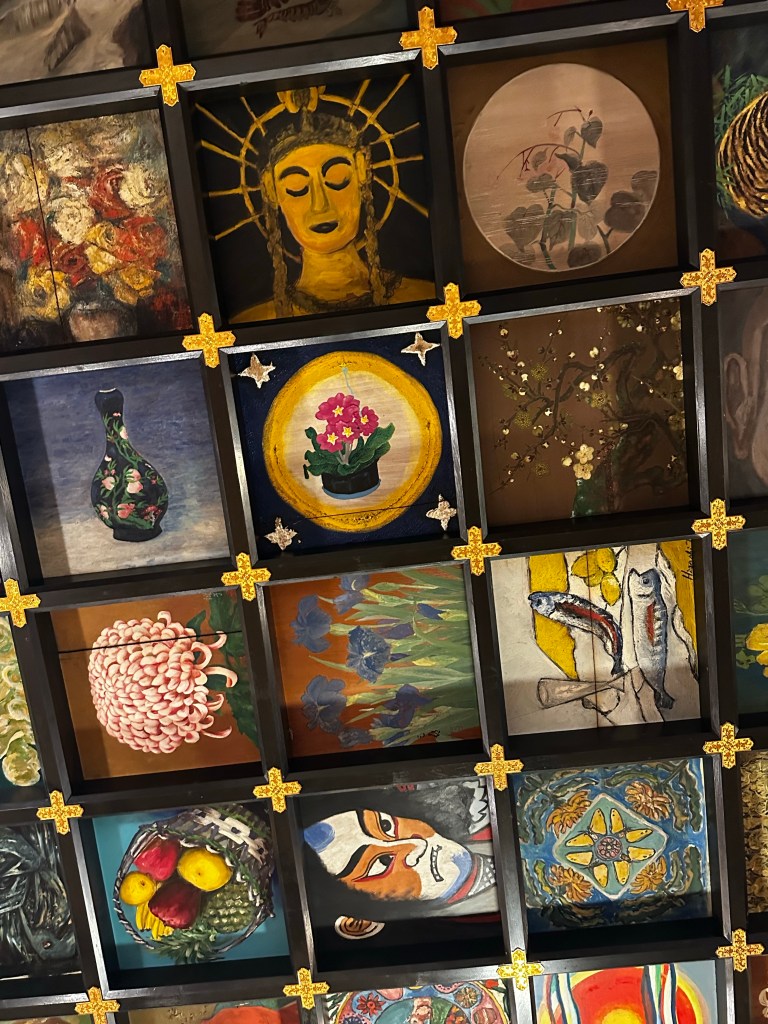
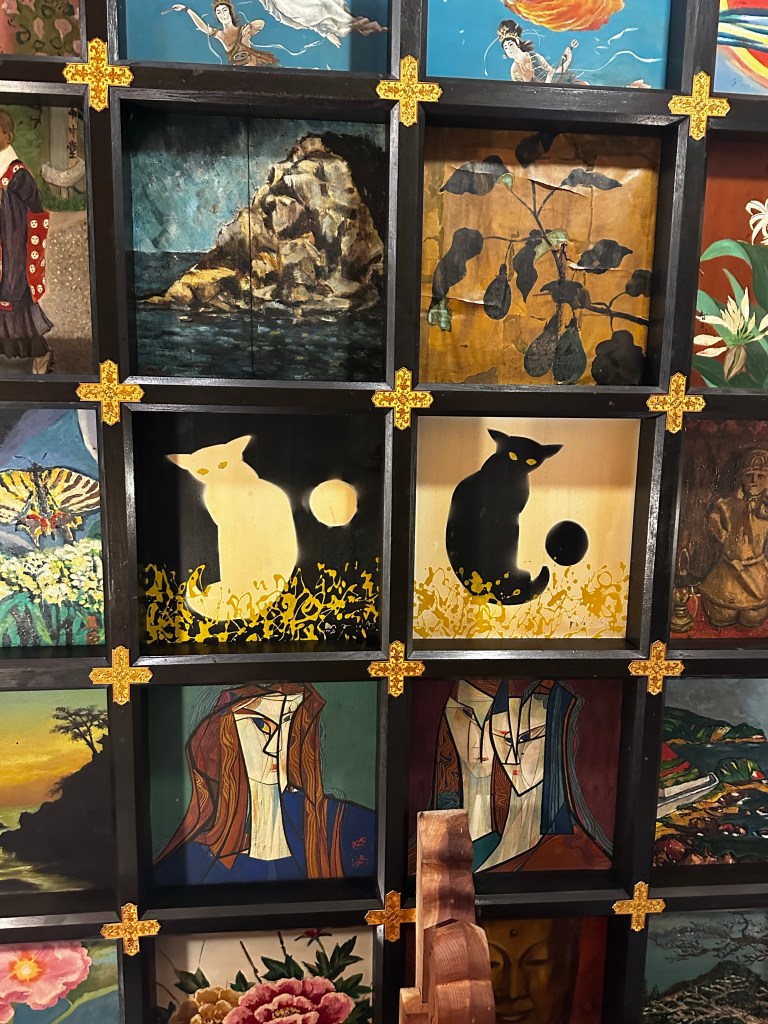
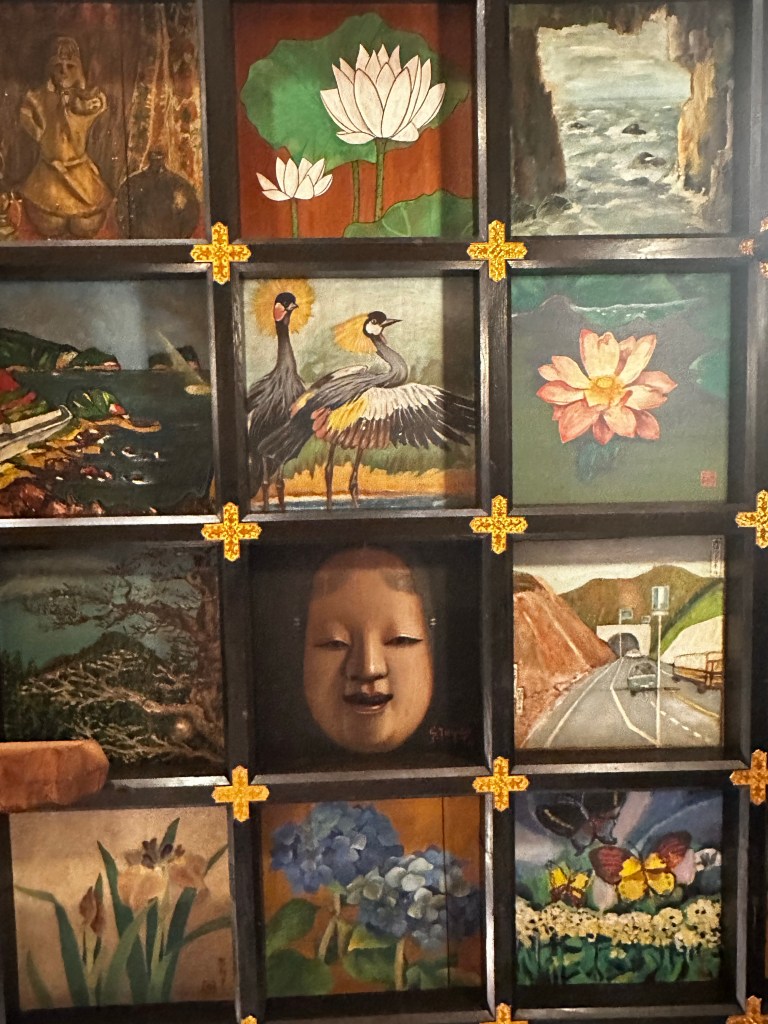
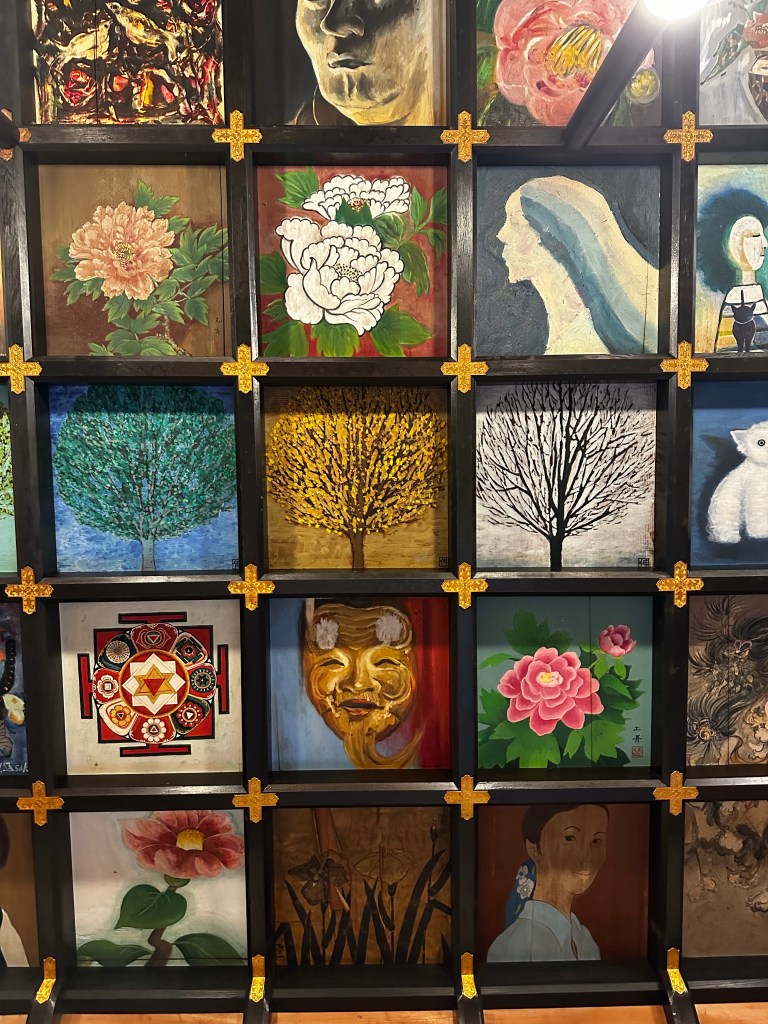
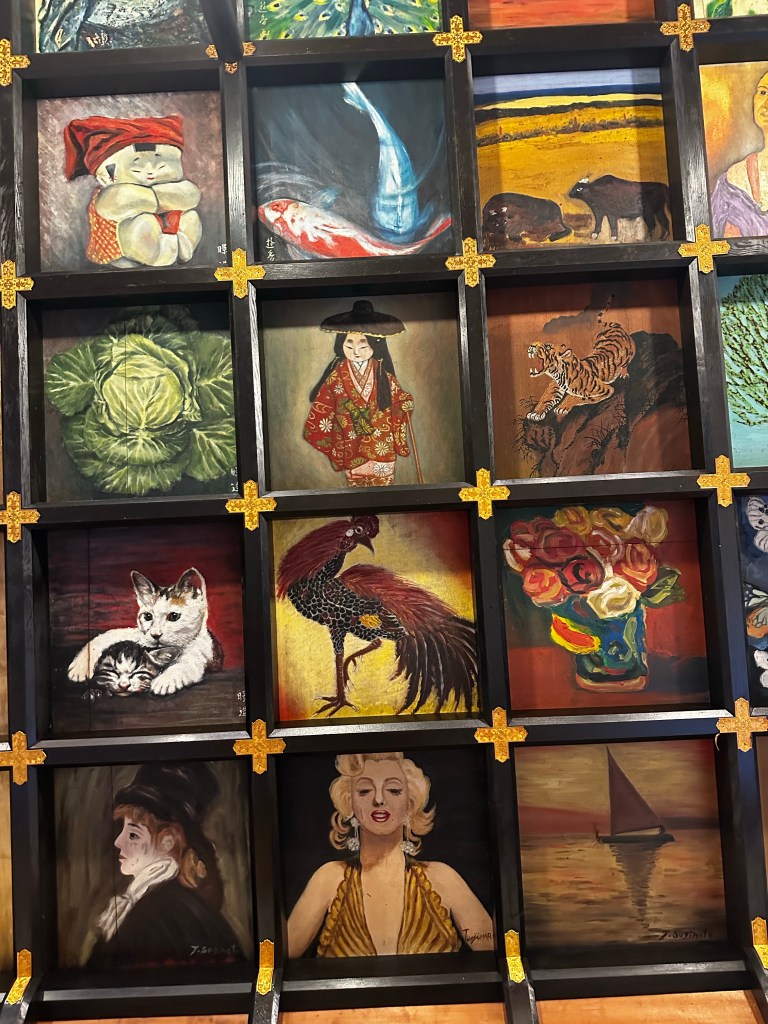
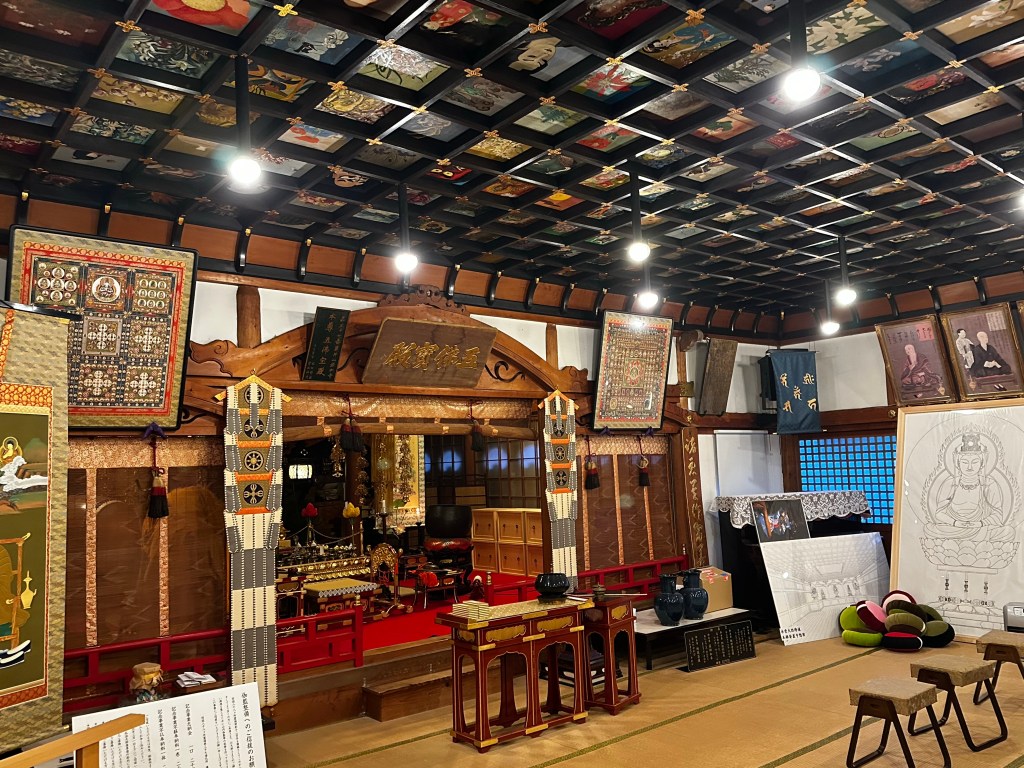
The service lasted from 6:00 to 7:00 a.m. We were then to have breakfast, but I needed to take those promised pictures of the ceiling of the Hondo.
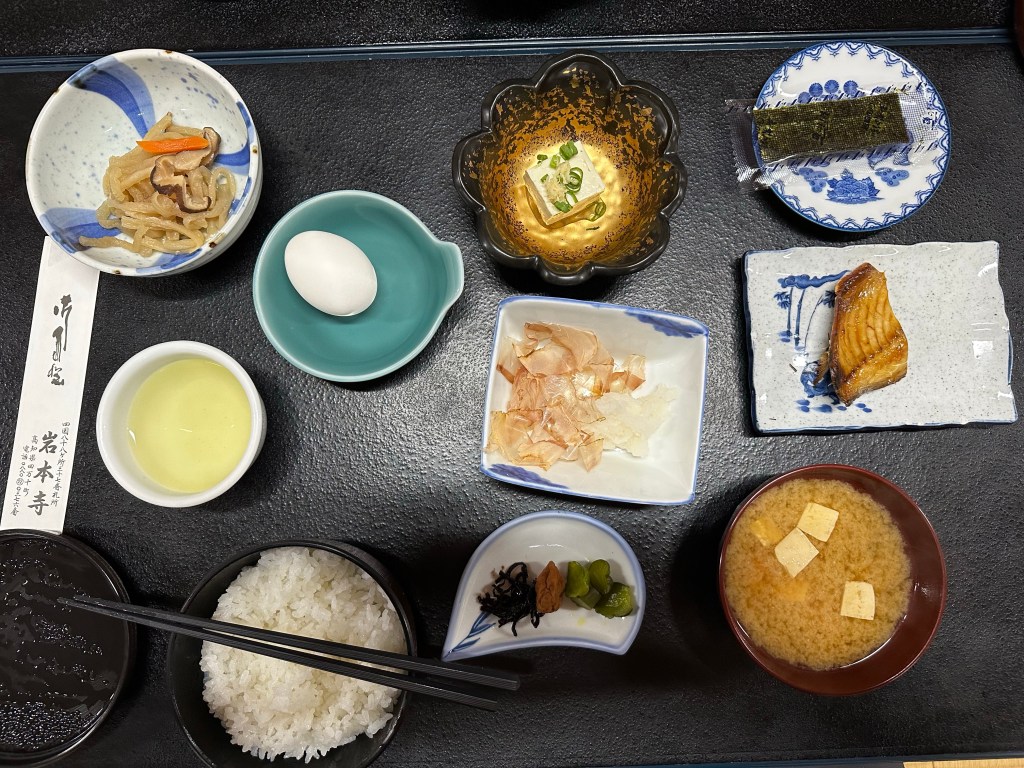
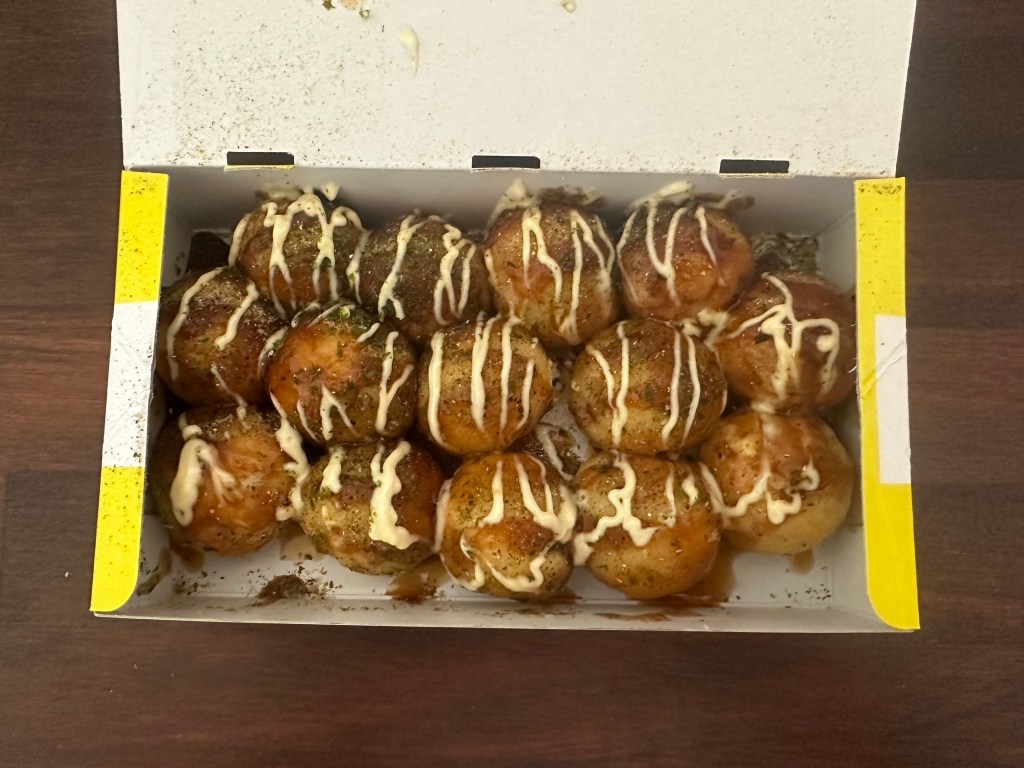
We had a late start and 18 miles to go before our day was to end. Since we were uncertain where or what time we would lunch, we picked up a “Plan B” lunch to eat on the road. I’ve thrown out two sandwiches already as we found and had time for lunch at a restaurant. I don’t trust the eggs and/or mayo on my store bought sandwiches to last until the next day unrefrigerated. We set out back to the coast once again. The few mountain paths we took were mostly downhill, so with some careful stepping down the still damp rocks from the previous evening’s rain we made our way south.
It was a lovely day and we were back in the valleys and rural villages.

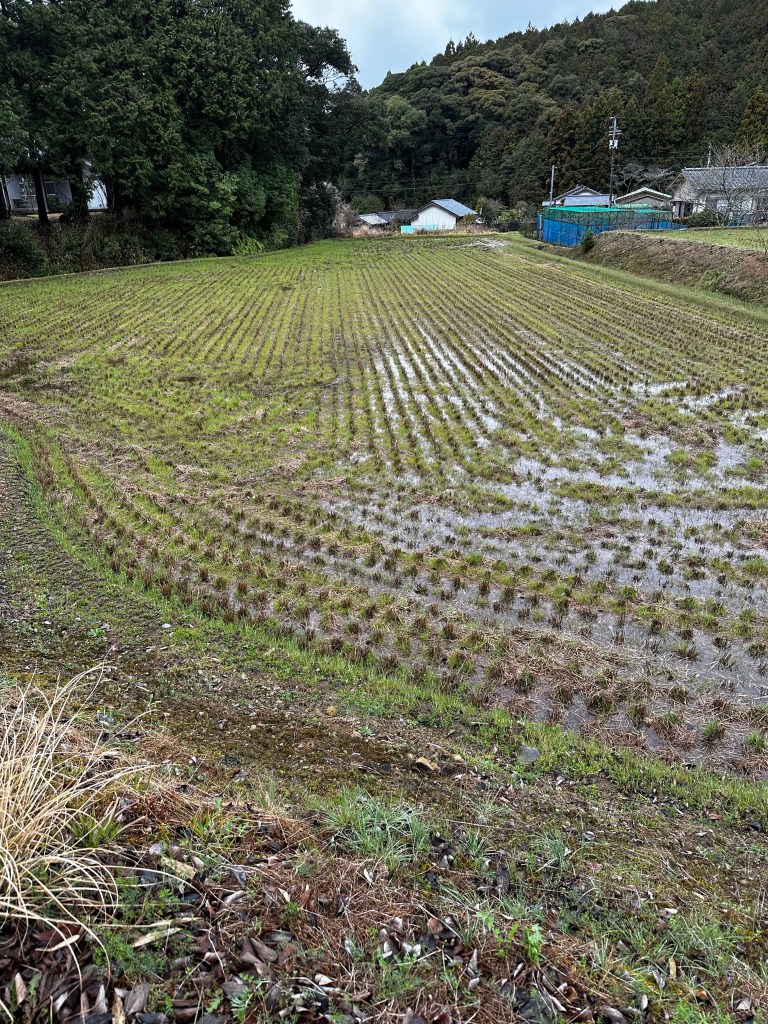
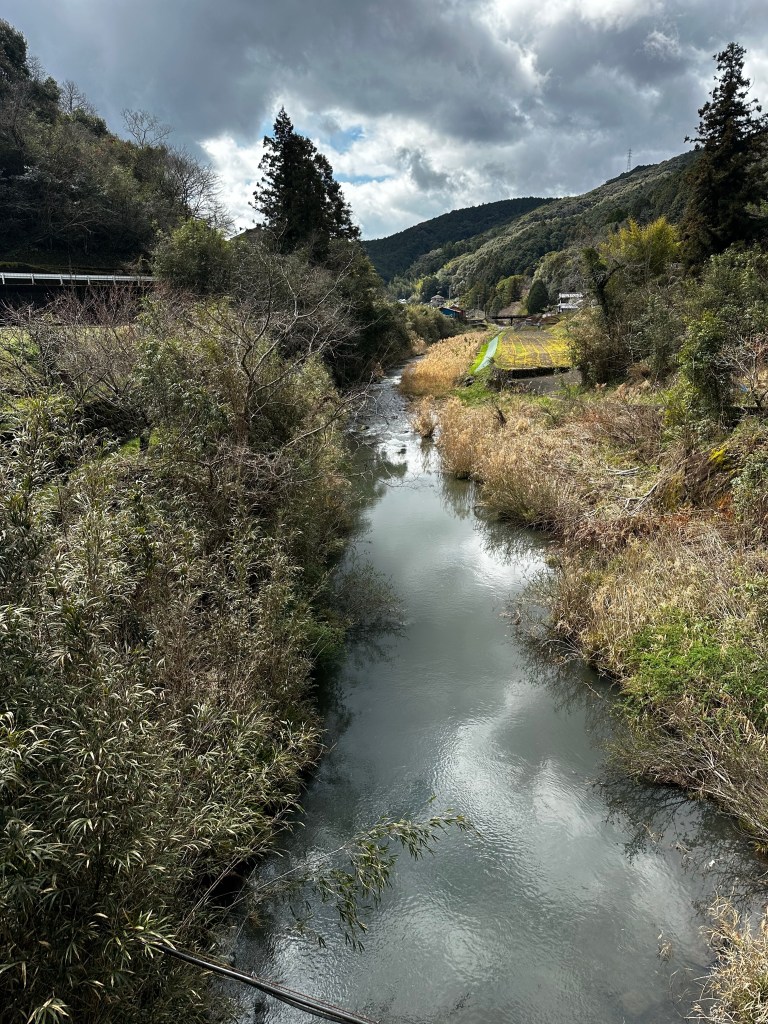
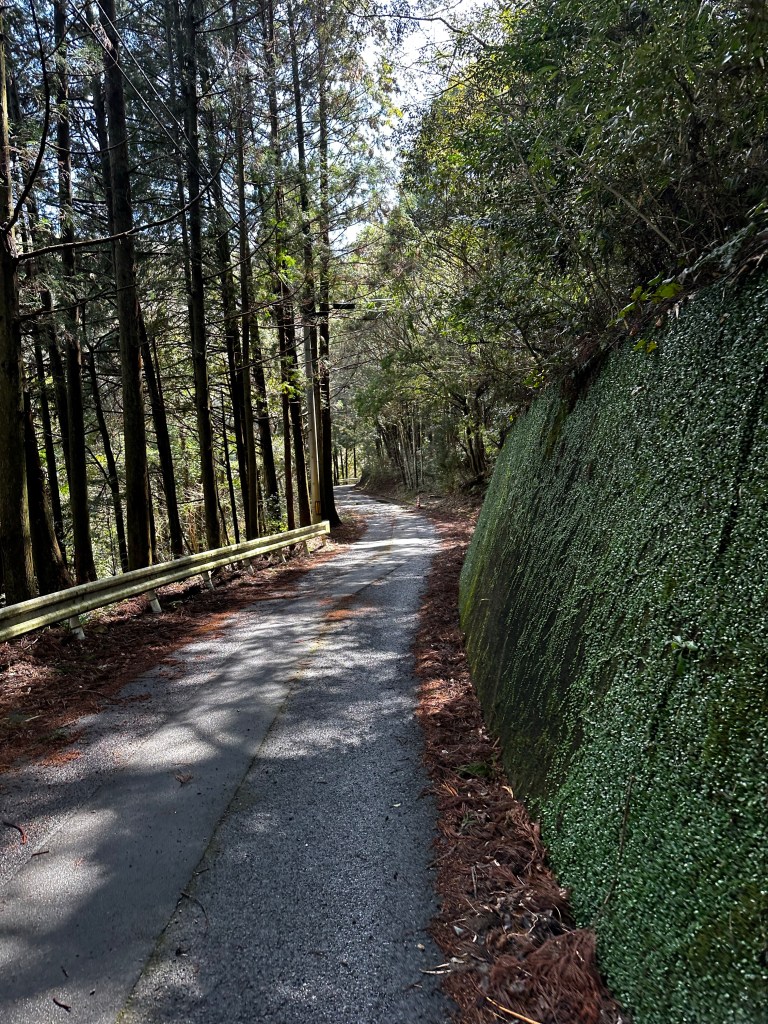
The pilgrim trail has traditionally followed the roads that were in use before the invention of the automobile and the modern expressways. With the exception of mountain passes, the “traditional” route still follows these main roads which are now heavily traveled by motor vehicles. So the government of Japan has developed the Shikoku no Michi, a more rustic path which often, but not always, parallels the Henro no Michi. We chose to follow the Shikoku no Michi today as it was much more peaceful, only handling a fraction of the traffic of the main henro route.

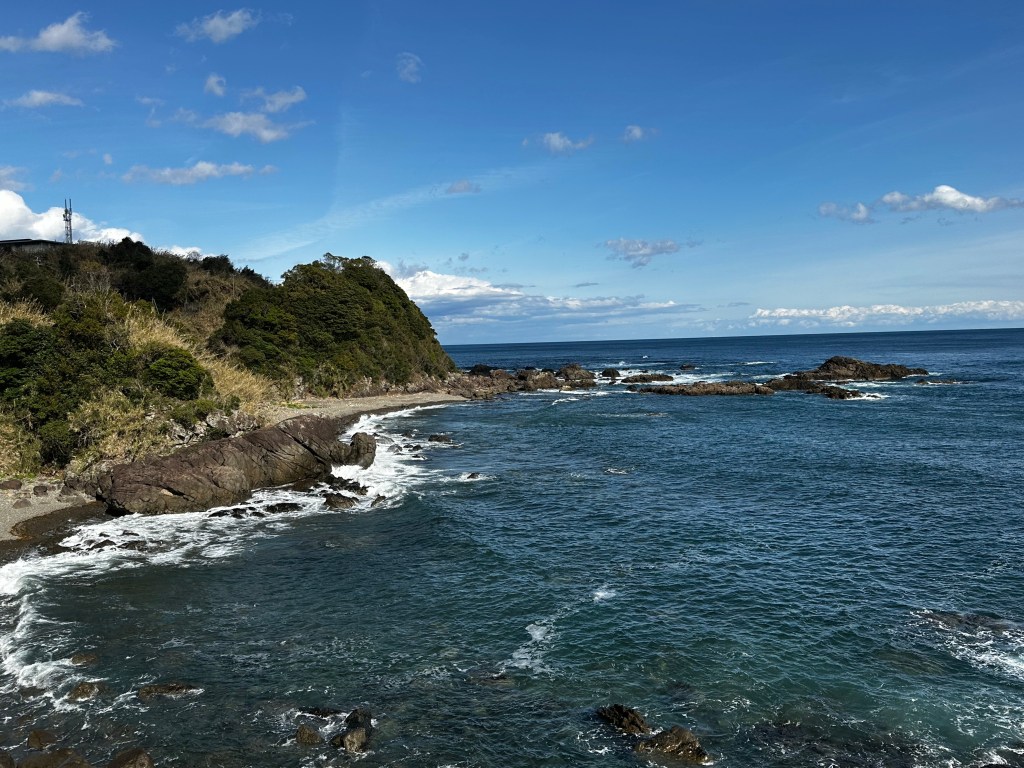
The rest of the afternoon was spent making our way to and then following the coast south. A small, older Japanese man whom we encountered near Bekkaku 5 and who also stayed at the shukubo in Iwamotoji came upon the two of us and just decided he would follow us as we looked like we knew where we were going. He didn’t speak a lick of English and didn’t seems to understand much of my limited Japanese. But the day was nice and we didn’t feel the least bit threatened by him, so he just sort of fell in about 10 feet behind us and the three of us continued on our way.
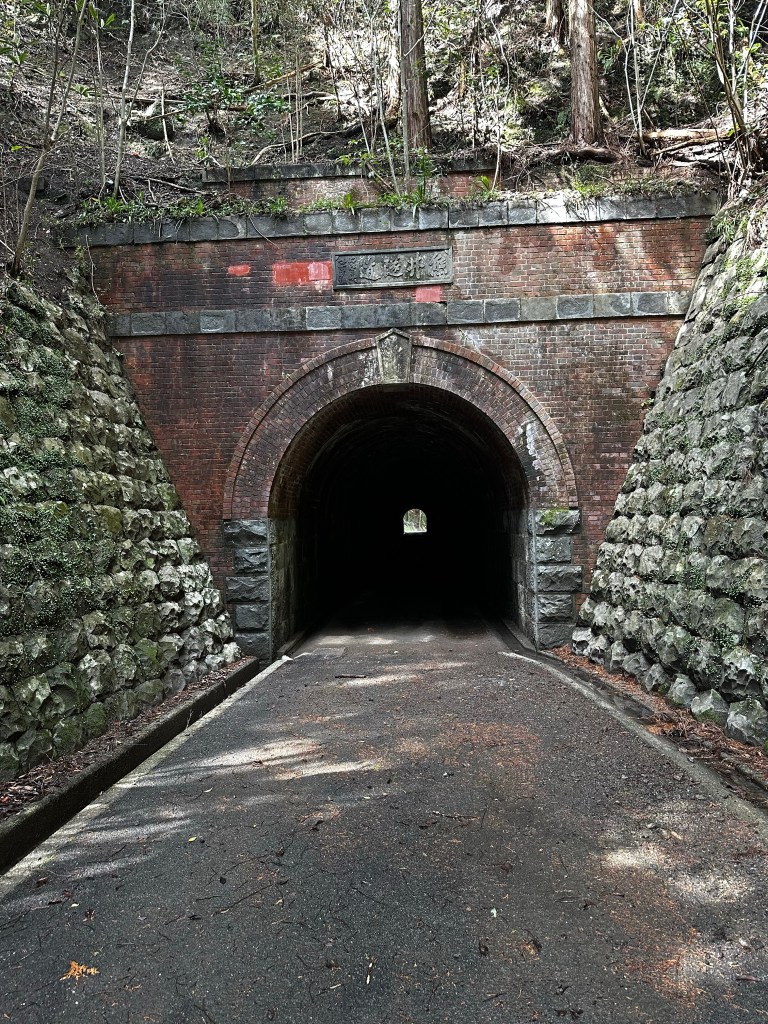
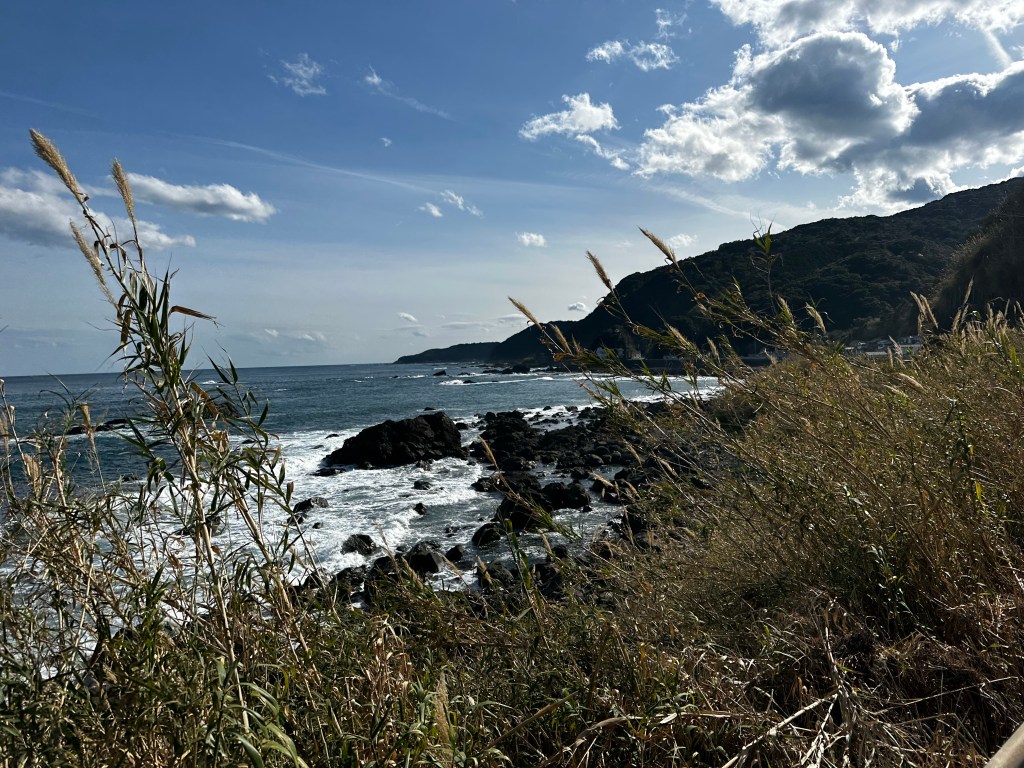
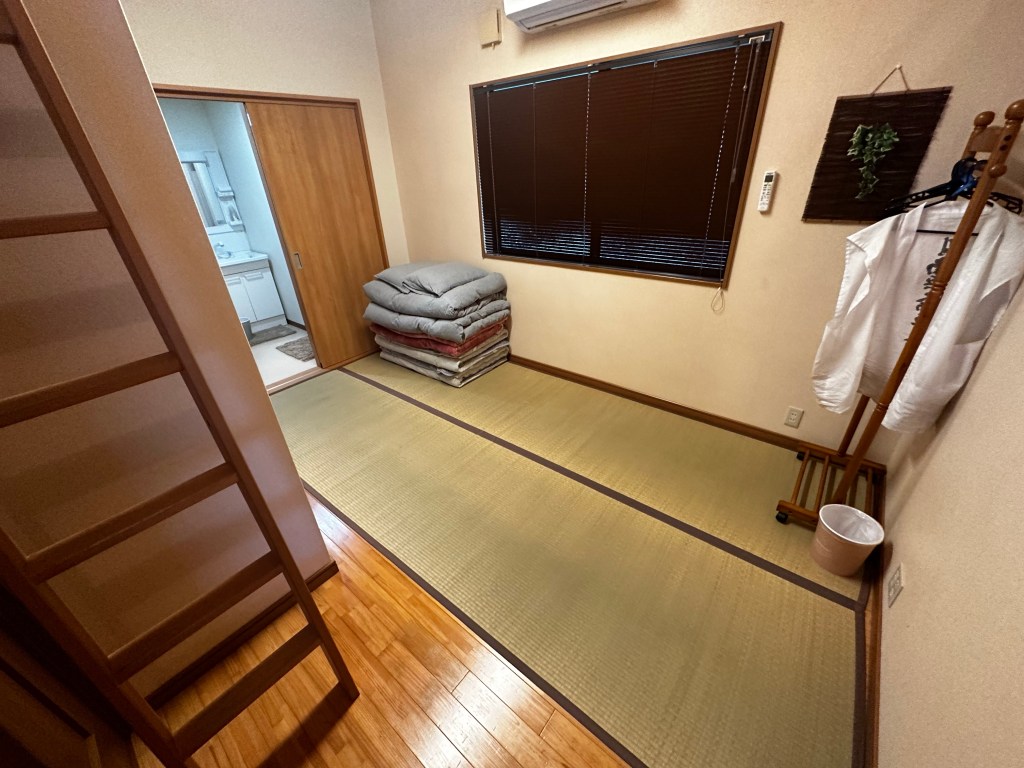
Less than half-an-hour after leaving our fellow traveler at his destination, we arrived at our lodging, Minshuku Shiratagawa, a little after 5:00 p.m. The owner didn’t speak any English, but we had now stayed at enough places that we knew what was required to check in. We only had to resort to our phone translation apps twice to confirm some details. It’s small, one bedroom house attached to a larger house, but it will suit our needs perfectly this evening.

 2023 Shikoku Henro
That’s the second time you’ve been followed by a native because you “looked like you knew where you were going”.
The temple ceiling exceeded my high expectations! So cool!
LikeLiked by 1 person
I’m curious, Bill. I noticed that you’ve only had one room with beds. Lots of your rooms are without beds. What do you sleep on in those cases?
LikeLike
Those are futons piled in the corner of the bedroom. I’m most of the places we assemble our beds before going to sleep and fold them back up in the morning. You’ll see the stacked futons in the Iwamotoji temple bedroom as well.
LikeLiked by 1 person